



مطحنة درفلة منتجات طويلة
/What Today’s Automated Packaging Machine Really Delivers (From a Plant-Floor Insider) I’ve spent enough time on production floors to know that an automated packaging machine is never just “a machine.” It’s the last line of defense before your product meets the real world: customers, carriers, climate, and chaos. In fact, the best lines I’ve seen behave more like orchestrated ecosystems—tight PLC logic, gentle but firm handling, fast changeovers, and traceability that auditors actually smile at. And yes, integration upstream matters more than people admit; even surface quality and flatness of metal sheet (think galvanizing lines) can make or break downstream packing yields. Industry trends you can’t ignore Data-first packaging: OEE dashboards and PackML states baked in from day one. Gentle handling at speed: vacuum-assisted pick, servo-synchronized infeed, smarter buffering. Material agility: recycled films, paper wraps, and printable QR for unit-level traceability. Upstream-aware controls: lines talking to mills, coaters, and slitters—surprisingly helpful. Quick aside: on a tour in Beijing, I watched a galvanizing line feed perfectly flat sheet into a downstream packer. No jams all afternoon. Not magic—just smart upstream processing. The Skin Pass Mill from Beijing YWLX (No.1518, LAR Valley Int’l, Guangwai Avenue, Xicheng District, Beijing, 100055) is built exactly for that: creating controlled roughness, improving flatness, and stabilizing mechanical properties to reduce yield plateau and stretcher strains. That upstream stability shows up later as fewer hiccups on a automated packaging machine . Typical technical specs (real-world values may vary) Throughput ≈ 40–180 packs/min (application-dependent) Package formats Flow-wrap, bag-in-box, tray + film, bundle wrap, coil/flat-sheet bundling Changeover time ≈ 5–20 min with recipe recall; tool-less where possible Film/paper PE, OPP, paper-based, recyclable mono-materials Power/Air ≈ 6–18 kW; 0.6–0.8 MPa clean, dry air Controls PLC + servo drives, PackML states, OPC UA/MQTT, vision QA Service life ≈ 8–12 years to major overhaul with proper PM Process flow and testing Materials enter via infeed conveyors or roll stands, buffered to avoid starve/block. Product is oriented and grouped; film or paper wraps and seals (hot bar, ultrasonic, or cold-seal), then coded and checked by vision (seal integrity, label presence, barcode). QA diverts rejects. FAT/SAT follows ISO/IEC electrical safety, CE Machinery Directive, and a URS-driven test matrix: 8-hour endurance at target rate, 95%+ first-pass yield, and packaging waste ≤ 2% (to be honest, I’ve seen 1% on well-tuned lines). When integrated with stabilized sheet from a Skin Pass Mill, downstream misfeeds drop noticeably. Where it’s used Food and beverage, pharma/OTC (with cGMP features), consumer goods, e-commerce. Industrial: bundling flat sheet, slit coil, and kits—especially after galvanizing/tempering. Vendor snapshot (brief, practical) Vendor Strengths Considerations Syntegon High-speed flow-wrap, pharma compliance Premium pricing ULMA Versatile formats, solid global support Lead times can stretch Ishida Weighing + inspection + pack integration Best for specific categories Krones Beverage ecosystems, turnkey lines Complexity at scale OEM (China, integrators) Value, fast customization; can interface with mills like YWLX Skin Pass lines Verify standards, documentation depth Customization that pays off Upstream-aware controls: coil/sheet dimensions from MES; fewer no-reads and jams. Recipe libraries per SKU; auto-adjust lanes and film draw. HMI in operator language; remote diagnostics (VPN, role-based access). Many customers say the biggest win is stability: a consistent infeed condition reduces babysitting. Upstream Skin Pass Mills with rolling force up to 12,000 kN (widths to 1800 mm) can deliver flatter, more uniform sheet—nice synergy with a automated packaging machine . Case notes (real but anonymized) Coated-sheet packer: 22% fewer stoppages after tying PackML states to mill coil data; OEE rose from 62% to 71% in 8 weeks. Food flow-wrap: switched to mono-material film; seal redesign + ultrasonic cut waste from 3.1% to 1.4%. Compliance and test data Look for CE (2006/42/EC), ISO 9001 QA, ISO 13849 PLd safety where applicable, IEC 60204-1 electrical, UL 508A panels, and PackML/OPC UA for interoperability. On SAT, I like to see MTBF trending ≥ 250 h and first-pass yield ≥ 95% over a 16-hour run. For metal lines, tying in surface-roughness data (Ra targets) from the Skin Pass Mill helps QA correlate seal quality and scuffing downstream. It sounds nerdy; it saves money. Sources: EU Machinery Directive 2006/42/EC (CE) – Official Journal of the European Union. ISO 13849-1: Safety of machinery—Safety-related parts of control systems. IEC 60204-1: Safety of machinery—Electrical equipment of machines. UL 508A: Industrial Control Panels. OMAC PackML Guidelines for machine state models. ISO 9001: Quality management systems.

We have successfully executed over 500
projects around the world,
many first-of-their-kind
research projects and products in China, including
We have successfully executed over 500
projects around the world,
many first-of-their-kind
research projects and products in China, including
-
2004
The 1st hydraulic AGC system for hot rolling of ribbon steel
-
2006
The 1st AFC system used for 1450mm skin pass mill
-
2009
The 1st 5-stand tandem line with 2-stand POR & Uncoiler for 650mm ribbon steel
-
2012
The 1st reversing mill for 1380mm strip
-
2016
The 1st soft-rolling system used in skin pass mill
-
2019
The 1st fully automated medium-width tandem cold rolling mill
-
2021
The 1st 5000KN Twin-stand double skin pass mill
-
2022
The 1st coupled pickling line & tandem cold mill with two modes - big roller & small roller
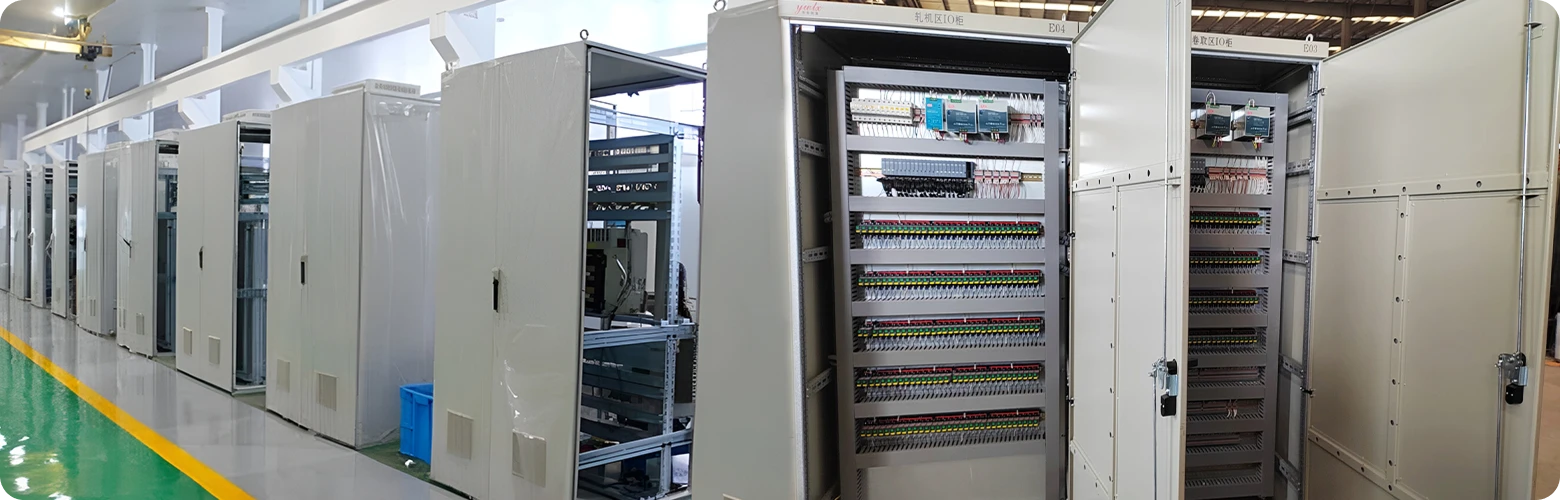
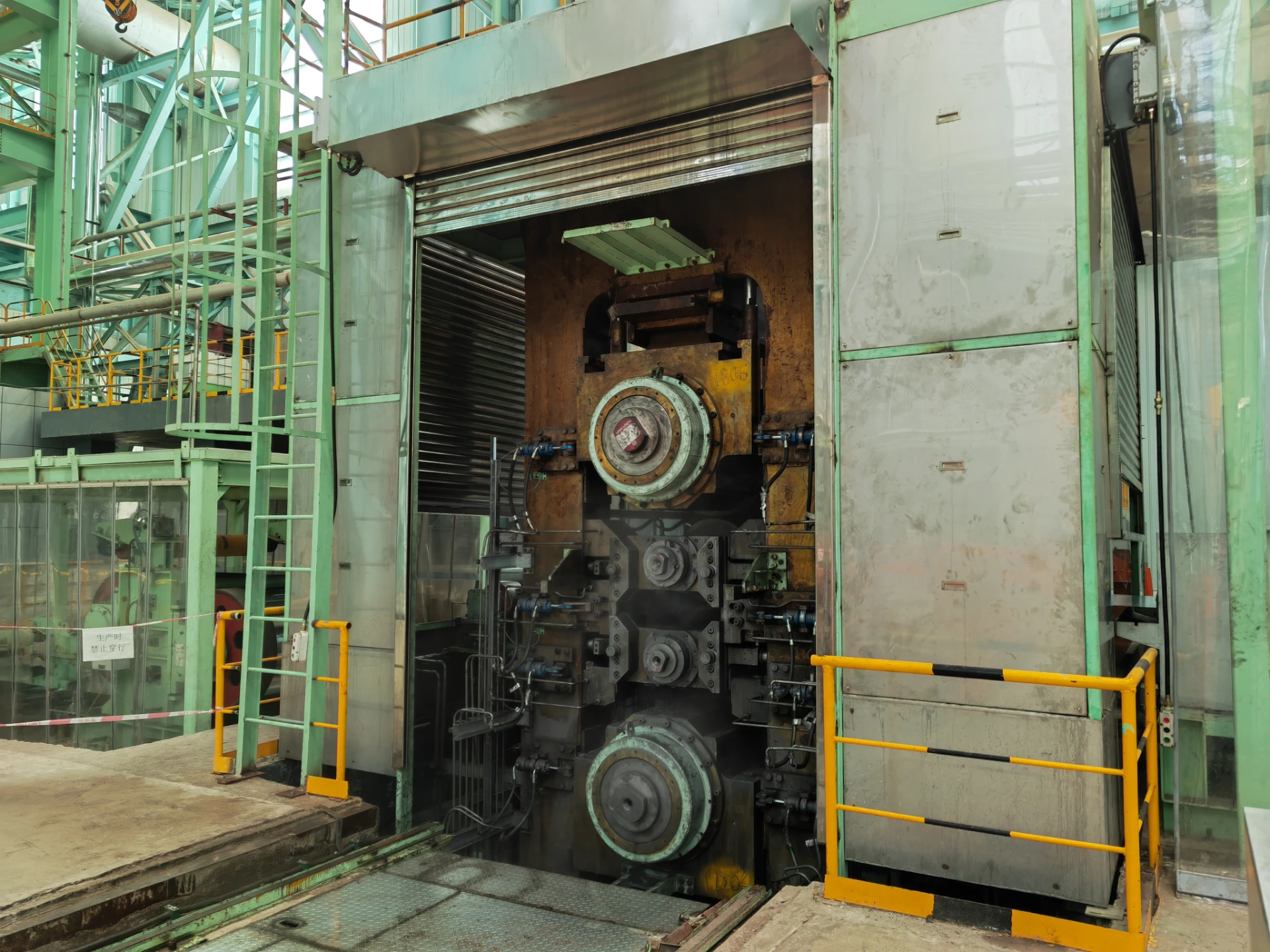
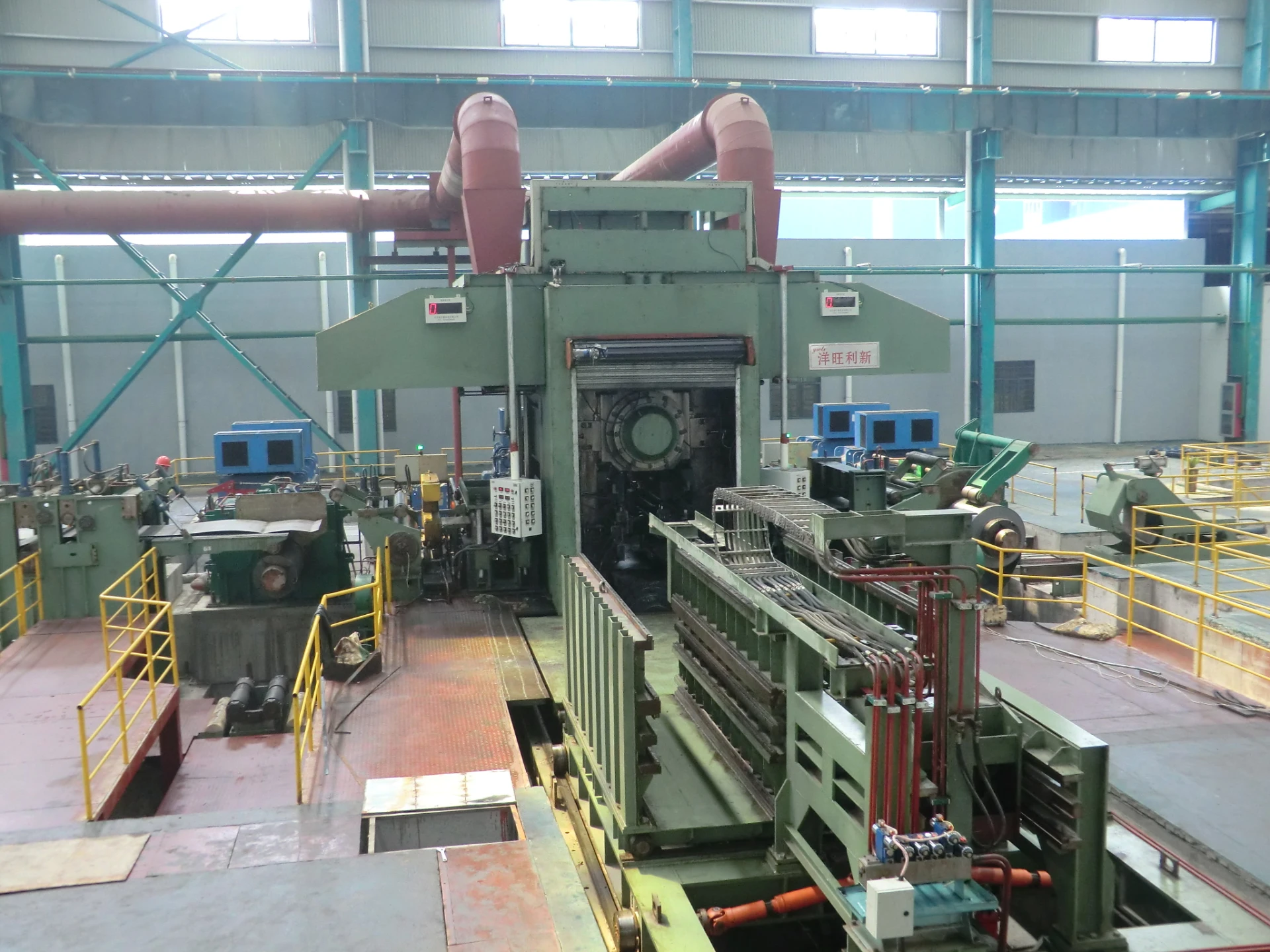
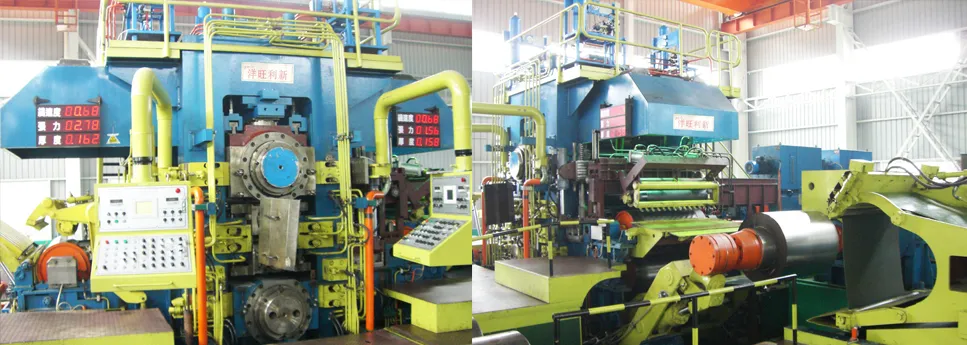
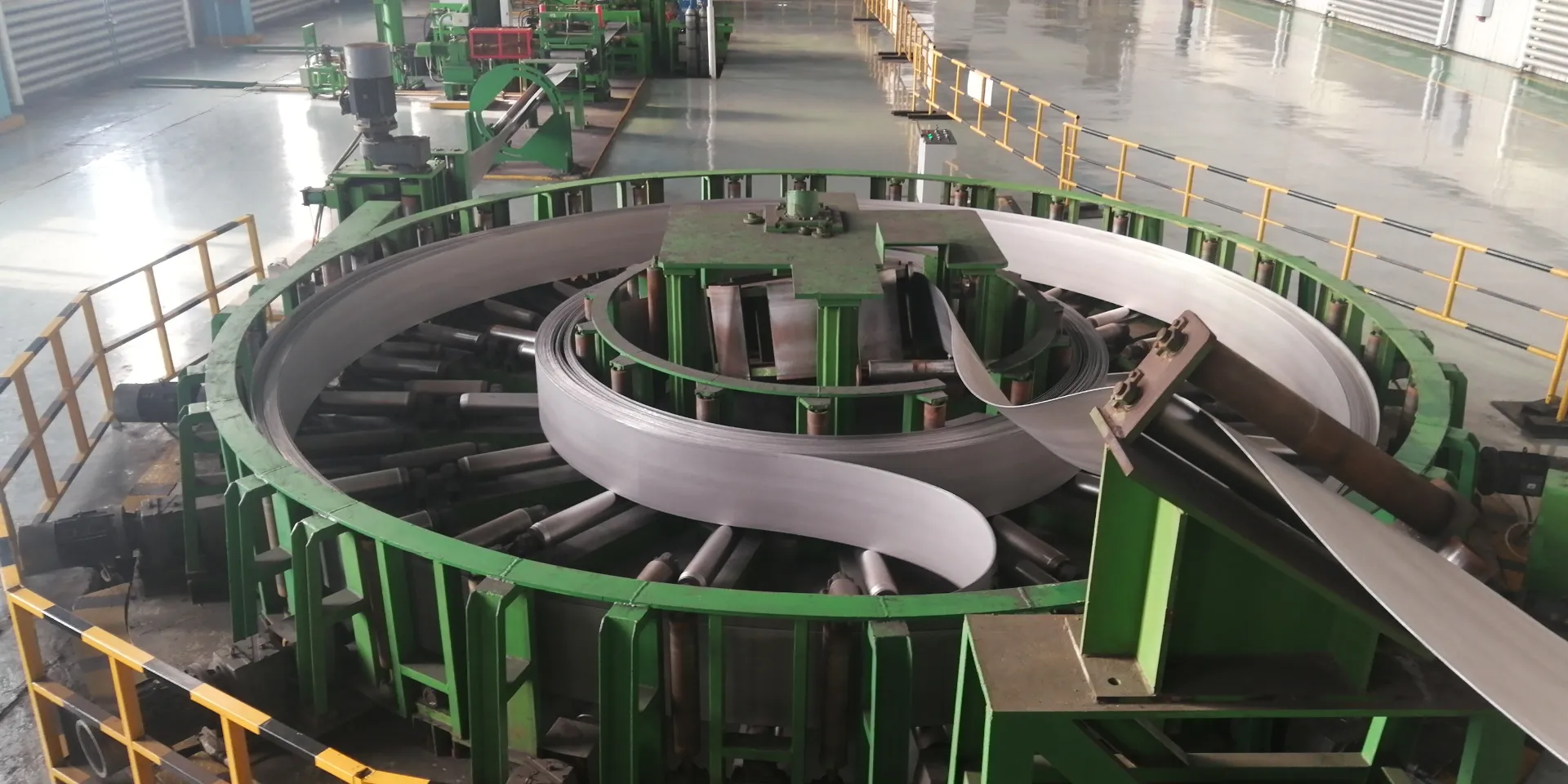
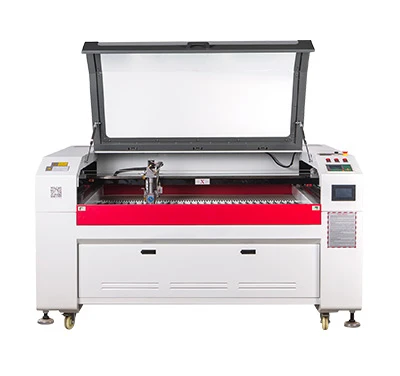
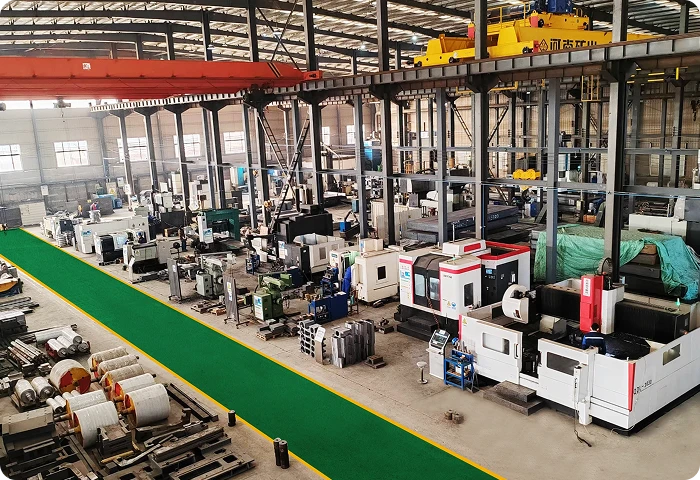
Yang Wang Li Xin operates a state-of-the-art facility over 66,000 square meters,and our manufacturing facility is fully equipped with high-tech machinery and high-capacity cranes. This enables us to handle large work pieces measuring 4.5m in width, 10m in length, and 1.5m in height, guaranteeing our capacity to produce 1800mm skin-pass mills and 1450mm rolling mills. The individual piece can weigh up to 100 tons.

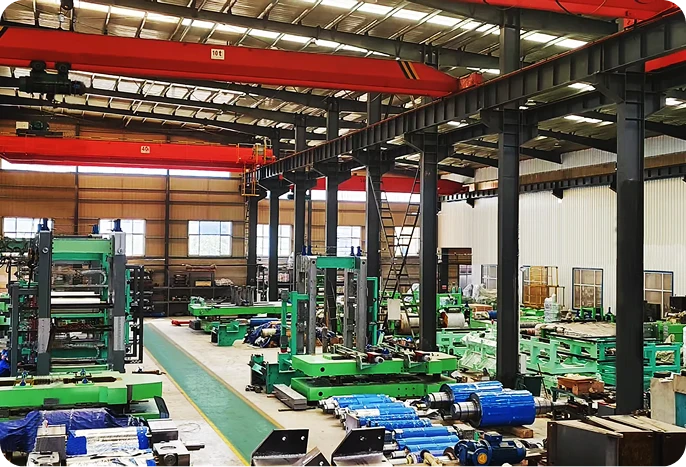

Quality is fundamental to the enterprise survival. We have established a comprehensive and meticulous quality management system and have successfully obtained ISO14000 certification. Starting from the design source, it supervises the entire production cycle, including design, procurement, processing, assembly, in-factory testing, installation, and online commissioning. The workshop is equipped with measuring tools like vernier calipers, spectrometers, hardness testers, and ultrasonic flaw detectors. They are used to check materials and control tolerances to ensure the final equipment meets or exceeds requirements. All products have a unique code, This enables the easy identification and traceability of the equipment components and ensures full control of quality.


-
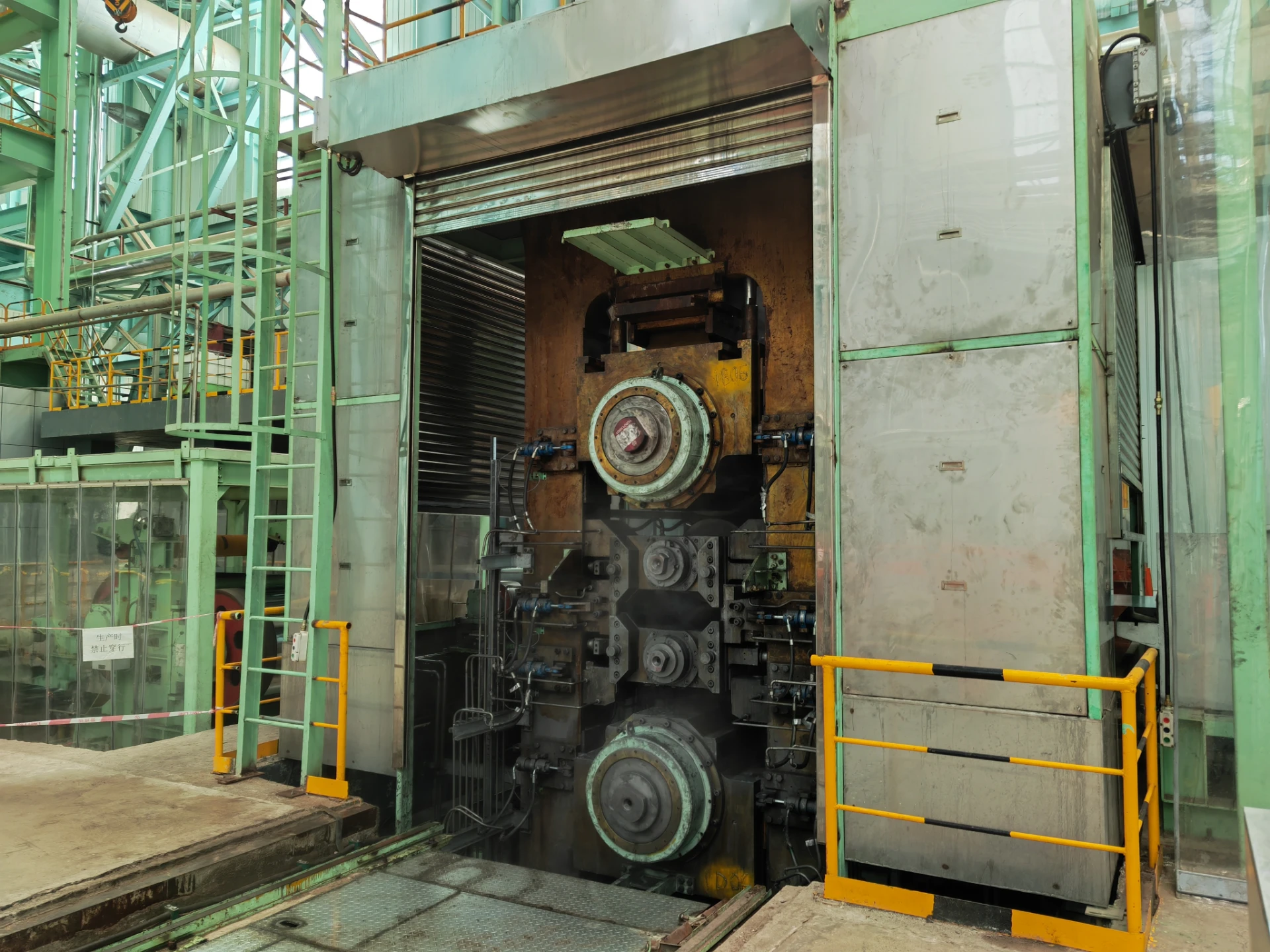 Cladding Rolling Mill-Beijing Yang Wang Li Xin Sci&Tech|Cold Rolling Cladding,Energy ConservationAs industries increasingly demand advanced materials with superior performance and environmental compliance, the Cladding Rolling Mill developed by Shijiazhuang Yangwang Electromechanical Technology Co., Ltd. (YWLX) stands out as a transformative solution. This cutting-edge technology addresses critical challenges in traditional metal cladding processes, offering a sustainable, cost-effective, and
 -
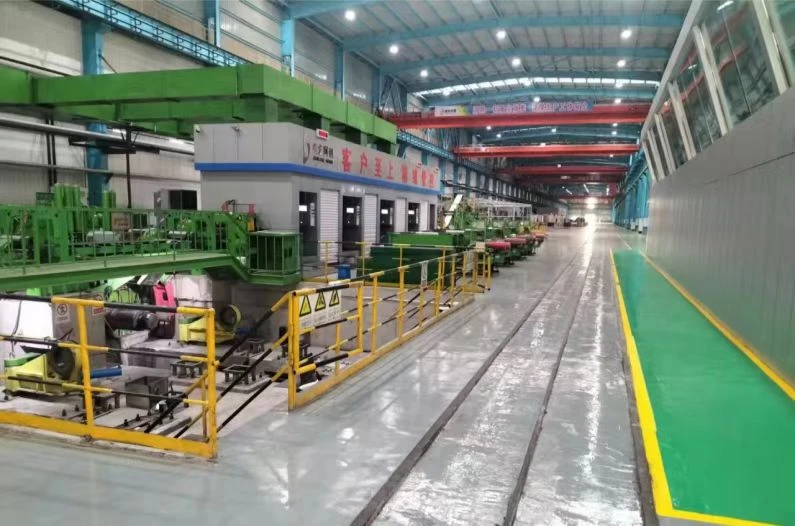 チタン圧延機The versatility and strength of the titanium rolling mill, or チタン圧延機, have made it an indispensable tool in various industrial sectors. Over the past decade, our company has become a pioneer in leveraging these technological marvels for a multitude of applications, ranging from aerospace to medical devices. Having invested heavily in Research and Development (R&D), we possess a unique blend of exp
 -
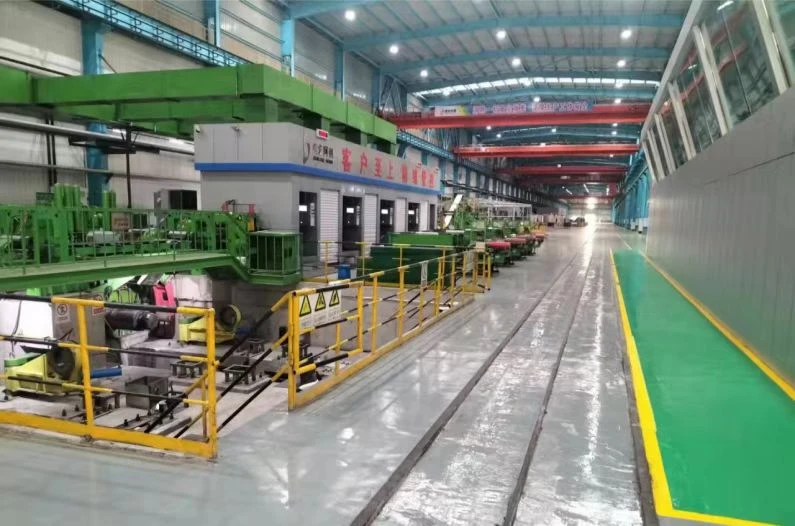 The Application of Skin Pass Mill in Galvanizing LineIn the modern steel manufacturing and surface treatment industry, the skin pass mill plays a crucial role, especially in the galvanizing line. A galvanizing line is designed to coat steel sheets with a layer of zinc to enhance their corrosion resistance. The skin pass process , which is an integral part of this line, significantly improves the quality and appearance of the galvanized products. The


